Managing a household on a tight budget has never been easy especially when food prices continue to rise. For many low-income families, groceries take up a significant portion of monthly expenses, often forcing difficult choices between quality, quantity, and nutrition. The real challenge isn’t just buying food it’s planning it efficiently. This is where modern tools like an ai recipe generator are quietly transforming the way families approach cooking and budgeting, helping them stretch every rupee further without compromising on meals.
The Hidden Cost of Poor Meal Planning
Most families don’t realize how much money is lost due to unplanned cooking habits. It starts small—buying extra vegetables that spoil, forgetting what’s already in the fridge, or ordering food because nothing “feels” cookable at the moment. Over time, these small inefficiencies compound into significant waste.
AI meal planning helps solve this by suggesting recipes that incorporate leftovers and partial ingredients. Instead of throwing away unused items, families can repurpose them into new meals. For example:
- Leftover rice can become fried rice or cutlets
- Extra vegetables can turn into mixed curries or soups
- Stale bread can be used for snacks or quick breakfasts
By consistently using everything they buy, families not only save money but also reduce waste in a meaningful way.
Ai Weekly Planning: The Real Game Changer
Daily decision-making is exhausting especially when you’re trying to stay within a budget. This often leads to repeated meals, poor nutrition, or expensive last-minute orders.
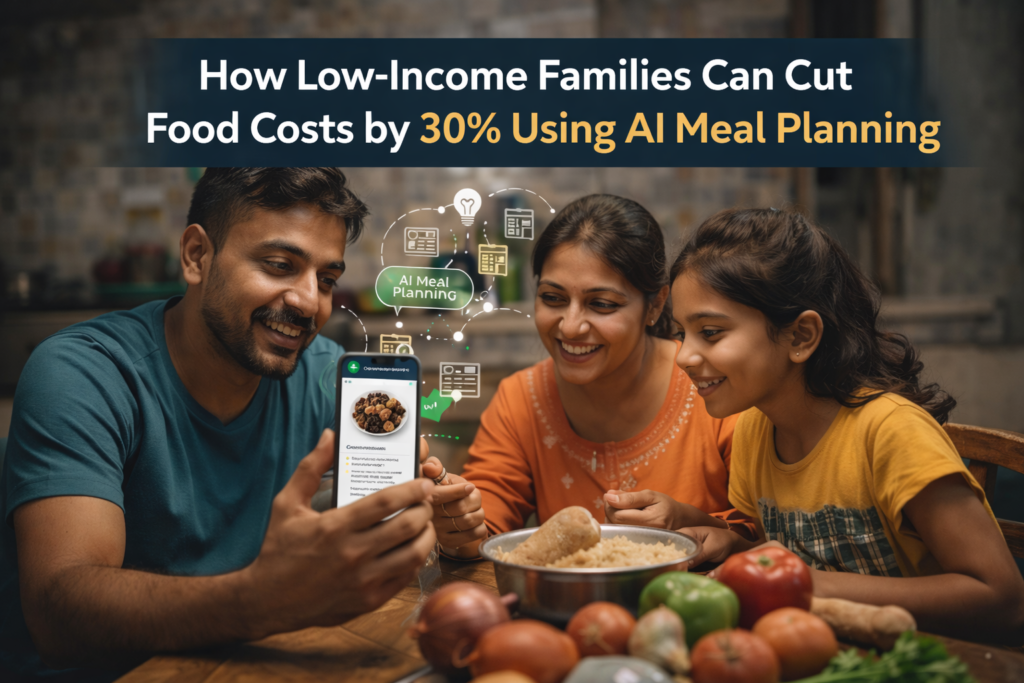
Weekly meal planning removes this stress completely.
With AI-powered tools, families can generate an entire week’s meal plan in minutes. This provides clarity on:
- What meals will be cooked each day
- What ingredients are required
- How to balance nutrition across the week
Once the plan is ready, a grocery list can be created instantly. This prevents overbuying and ensures that every item purchased has a purpose.
For low-income families, this structured approach can lead to consistent savings and better financial control.
Avoiding Expensive Last-Minute Decisions
One of the biggest reasons for overspending is last-minute food decisions. After a long day, if there’s no clear plan, ordering food or buying ready-made meals becomes the easiest option.
While convenient, this habit is expensive.
Having a pre-planned meal eliminates this problem entirely. When families know exactly what they’re cooking, there’s no hesitation or confusion. The ingredients are already available, and the decision has already been made.
This shift from reactive cooking to planned cooking can reduce unnecessary spending dramatically.
Ai Planned Smarter Grocery Shopping
Shopping without a plan often leads to two common mistakes:
- Buying more than needed
- Forgetting essential items
Both lead to inefficiency either through waste or repeated store visits.
AI-generated grocery lists solve this by aligning purchases directly with planned meals. Families buy only what they need, in the right quantities. Over time, this reduces both waste and excess spending.
It also makes shopping faster, more focused, and less stressful.
Ai Planned Better Nutrition on a Budget
There’s a common misconception that eating healthy is expensive. In reality, poor planning is what makes it costly.
When meals are planned properly, it becomes easier to include balanced portions of proteins, vegetables, and carbohydrates using affordable ingredients. Staples like lentils, seasonal vegetables, eggs, and grains can be combined in smarter ways to create nutritious meals without increasing costs.
AI meal planning helps families discover these combinations without requiring expert knowledge, making healthy eating more accessible.
A Simple Shift Towards Ai Makes a Big Difference
Cutting food costs doesn’t always require drastic changes. Sometimes, it’s about making smarter decisions consistently.
Using an ai recipe generator allows families to:
- Use ingredients more efficiently
- Reduce food waste
- Avoid unnecessary purchases
- Plan meals in advance
- Maintain better control over their budget
These small improvements, when practiced regularly, can lead to savings of up to 30% on monthly food expenses.
In a time where every rupee matters, adopting smarter cooking and planning habits can make a meaningful difference. And with the help of simple AI tools, even families with limited resources can take control of their kitchen and their budget with confidence.